February 13-19, 2013... The Marquesas and Dry Tortugas

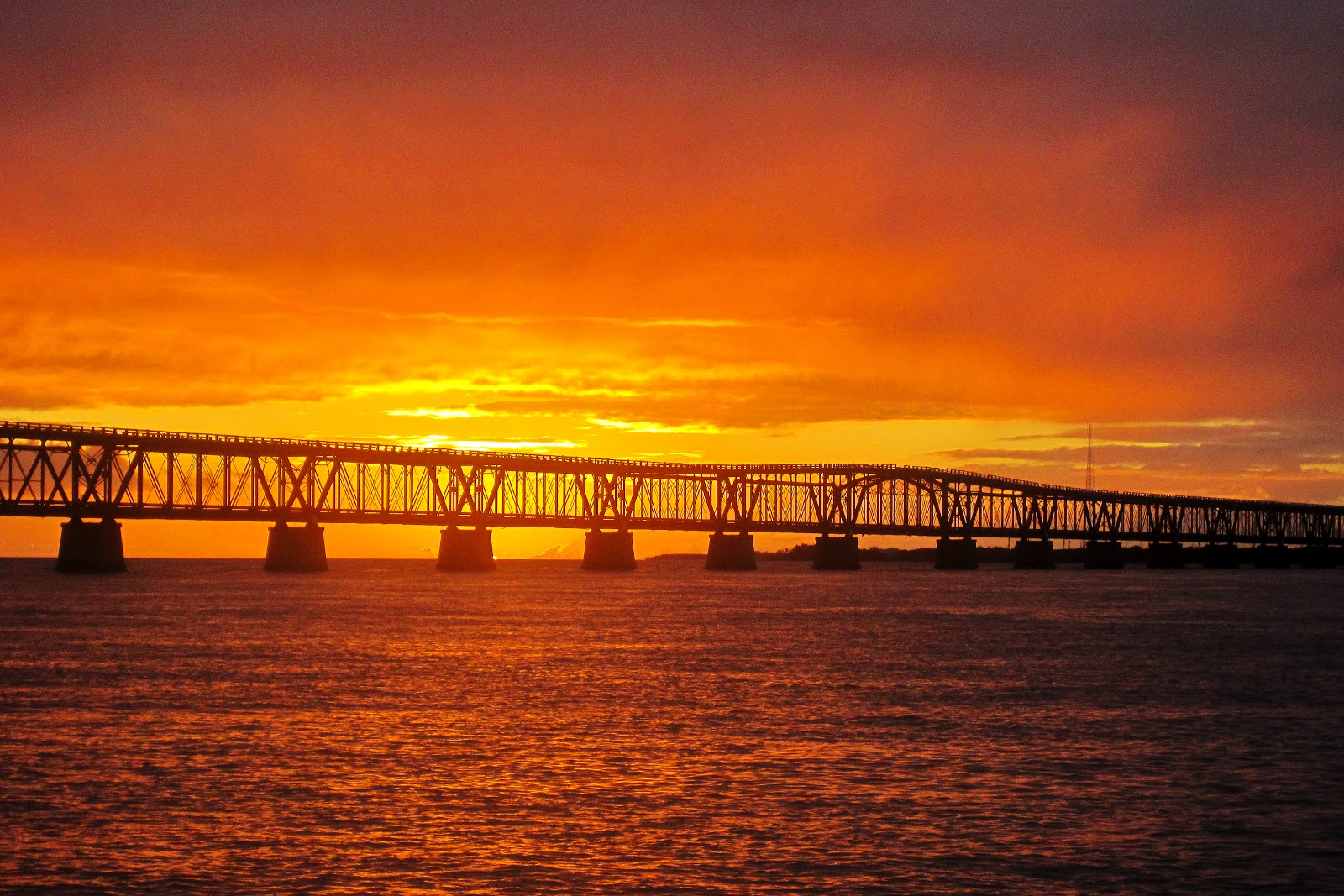
These last islands in the chain are beautiful and worth the trip. The Marquesas are small keys in the shape of an atoll about 20 miles from Key West. We anchored overnight only as there isn't much protection for a boat with a deeper draft. It would be a great place to get back to when the weather is calmer. On the way we had a dolphin accompany us and a turtle greet us in the anchorage. The sunset was beautiful as it was just us, the water, and the sky.


Next day, 40 miles on to the Dry Tortugas National Park. The only people here are the park rangers, other cruisers, overnight campers and the daytrippers who take either the ferry or seaplane out from Key West. When the planes and ferries go back to the barn, it is a very quiet place. The first night we arrived, an unforecasted storm did as well. Steady winds of 25 with gusts over 30 and downpours for HOURS were a big surprise -- to us as well as the fishing boats that hurried into the harbor after sunset. Everyone made it through ok. One of the fishing boats that came in for the storm traded us yellowtail snapper for beer. They even cleaned the fish for us and invited us onboard for some Cuban coffee. You never know who you will meet when cruising.


Garden Key is the island with Fort Jefferson -- a beautiful brick fort and moat started in the mid-1800s and never finished, though under construction for 30 years. It served as a Union military prison during the Civil War and was abandoned 10 years later by the Army. Later it was used as a coaling station for warships. The Maine stopped there on its way to Cuba in 1898. FDR proclaimed it a National Monument in 1935 and in the 1990s became part of the Dry Tortugas National Park. You are allowed to walk up to the fort roof (terreplein) and see some of the Rodman cannons still there. And what a view of the ocean, keys, and birds.


The Park is a wildlife refuge for nesting sooty terns, brown noddies, and frigatebirds. Of course there are also other seabirds like seagulls, ruddy turnstones and pelicans. The literature says over 100,000 birds are here at peak season. That's a lot of noise... and guano. Most of the time we were there, the wind was so high that we couldn't hear the birds, but when the wind settles it is an amazing racket. The birds were so thick over Bush Key and Long Key that from a distance they looked like bees swarming around a hive. Visiting under the boat were at least two goliath groupers -- said to be about 300 pounds each. That's a lot of fish.


We waited out another cold front with high winds, and left when we were the only ones still in the harbor. Another great place.


Marquesas Keys: 24d33.593'N 82d10.158'W
Dry Tortugas: 24d37.470'N 82d52.308'W

February 3-13, 2013... Key West, FL

Waited for weather. Got it wrong. Same old song. Left the anchorage off Little Torch in 16 knots. Blew 20-25 in the Hawk Channel. With our staysail and our incredibly reefed mini-main, we had a rather sporty sail for the 30 miles to Key West. Around Fleming Key we picked up a mooring off Garrison Bight and got ready for the 'big town'. First day in we met cousins Joel and Sarah with little cutie David (who we were seeing for the first time), down in the Keys for a vacation. Last time we saw Sarah and Joel was in the Thimbles in Connecticut, 4 years ago. What a pleasure to catch up. And that David -- what a kid!


Over the next week we walked all over the Old Town, the New Town, alternately sightseeing and getting prepped to leave the country. If you can avoid Duval Street and the daily disgorging of cruise ship passengers, Key West can be a wonderful small town. Many old houses have been beautifully restored. We met one lady who called to us from her porch. In our conversation we learned that she was born in that house 90 years ago. The changes she has seen!


We made ourselves at home, finding great places to eat (loved Santiago's Bodega), buy fresh bread, watch the sunsets (people blow the shell to celebrate sundown), and see the neighbors change in the mooring field. Still winter, we needed to watch the weather and wait to leave for the last keys in the US -- the Marquesas and the Dry Tortugas -- before the big jump to Mexico.

Key West:  24d34.538'N  81d47.302'W


January 17-31, 2013... The Lower Keys


Ah yes.  Another cold front coming.  Winter in the southwest north Atlantic.  Had to leave Bahia Honda to find shelter from the storm.  By the time we woke up, the other boats in the anchorage had gone.  Close by is Newfound Harbor/Coupon Bight, a great big stretch of water in the Lower Keys formed by Big Pine, the Torch & Ramrod Keys, and the small oceanfront Newfound Keys.  We anchored south of the mangroves of Little Torch Key figuring the winds and fetch would be minimal here.  Indeed, the cold front came, bringing very cold winds.  Day one we stayed on the boat wearing long sleeves and pants (ugh), doing some boat chores.  Day two, the sun was out -- aaahhh.  Lowering the dinghy for the first time in weeks, zipped over to Big Pine.  First to the annual nautical flea market.  Second, Winn Dixie to restock the produce larder.  Third, Big Pine restaurant.  So full from that lunch, didn’t need dinner.

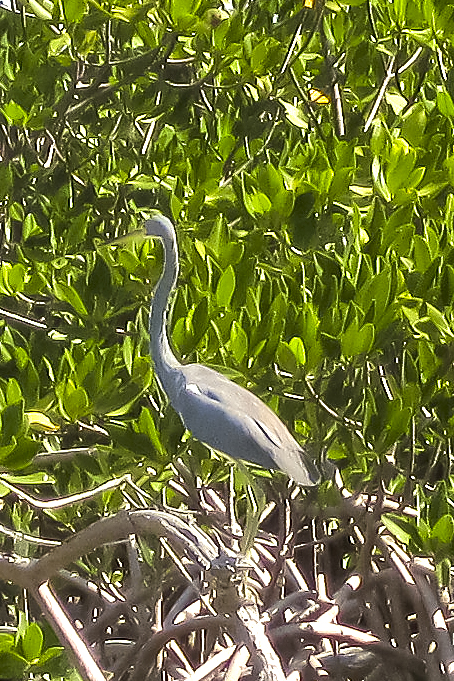
Next day, splashed the kayak to paddle through Coupon Bight Aquatic Preserve.  Lots of mangrove shorelines, some great white herons, turkey vultures, little blues, millions of cormorants, pelicans, a couple of ducks.  We were heading past one tiny island covered with cormorants when we heard a distinctly different noise -- a deep, very loud bellow.  Oh no!!  Not alligators!  We listened again and were sure this was a large reptile.  Upon further research we learned that the American crocodile lives around here, and since this was not a freshwater area, but saltwater, it was likelier to be a croc than a gator.  The good news is that they don’t attack people... usually.  The bad news is that January is mating season.  We paddled with haste but dignity away from the island, never having actually seen what was making the noise.


Monday morning.  No wind - a great day for snorkeling!  Dinghied out to sea to Newfound Harbor Key patch reef just a half mile from the channel.  Only ones there, picked up a sanctuary mooring.  Believe it or not, this was the first time snorkeling in almost a year and a half -- since leaving Bonaire in 2011.  We were spoiled by that fabulous experience and didn’t want to get in the water anywhere if it wasn’t pristine and with the promise of wonderful things to see.  Here in the Keys we have the clear water, but we didn’t get our hopes up after reading about the coral bleaching and how the reefs are deteriorating.  We were determined to try anyway.  But we went wearing full wetsuits  -- the water is still too cold in January.  Once in the water, it was like being with old friends.  Sergeant majors, blue tangs, French angelfish, damselfish, and more.  Sponges, corals, fans.  New friend -- the porkfish -- adult and juvenile!  Not so much diversity as we have come to expect, but pretty cool anyway.  Lots of barracuda (or cuda as they are known here...)  Lots.  Everywhere.  Little, big, and huge.  Good thing they thought we were pretty scary and swam away from us after trying to stare us down.  After about an hour we were getting cold (though John said he hadn’t been warm ever) so we swam back to the dinghy.  Felt great to swim on a reef again.  Looking forward to the next low wind day to do it again!


Still here after another week.  Stuff to do.  Had to stay for the Island Grass Music Fest hosted at Boondocks restaurant -- a wonderful fundraiser for Habitat for Humanity.  All the bands donated their time.  Of course we had a great time dancing -- thanks to Bill Blue’s band.  Met some great people -- thanks to Larry and Eusebio for making us feel welcome.

Did we mention the water gets very shallow here at low tide?  Another all-day paddle between Little Torch Key and Ramrod Key and we found that out the hard way.  Going to Ramrod, we were just fine.  On the way back... well someone had to get out of the boat and pull.  Just like Bogie in the African Queen, Johnson’s our man.  Thankfully, no leeches...


Little Torch Key:  24d38.817’N  81d23.080’W

January 15-17, 2013... Bahia Honda Key


Headed south and then west as the island chain turned, sailed to the entrance marker of Bahia Honda.  As in all the waters around here, we had to weave through the lobster and crab pot floats, so no autopiloting.  Almost mistook a big turtle swimming by as another pot!  Love seeing them.  The entrance to Bahia Honda is fairly distinctive as the old railroad bridge remains standing with a cut through to allow taller boats into the waters just west of the key.  In a bit of a roll in the anchorage, we faced the north current rather than the wind from the east.  Then we realized we were west of the Florida peninsula -- and the waters to the north were the Gulf of Mexico!  Another first for Anhinga.  We enjoyed the sunset and planned the next day.


Bahia Honda State Park is a fabulous park on the Key.  Some of the brochures go so far to say it has one of the 10 best beaches in the U.S., but well, maybe.  We were happy to walk the island.  Saw what we thought was a rare butterfly... till we saw hundreds of them... then found out they are the zebra longwing, Florida’s state butterfly.  Saw some interesting plants, like the gray nickerbean, one of those that has seeds that float to far off exotic places (maybe that’s how it got to Florida?)  And after learning about them on Lignumvitae, we saw golden orb spiders here.  (So now we are identifying spiders... isn't cruising grand?)


The water is beautiful and hundreds of people come to the beaches on the island as daytrippers or campers.  After our walk we decided we liked the long stretches of Sandspur beach the best.  There are campsites along here for those hardy tent campers (not RVs -- they have another area) looking for a wonderful oceanfront experience.  The wooded areas smell fresh and the sound of the waves is great -- if you like camping, this is an excellent spot.


The park allows you to walk up onto the end of the old railroad bridge for a sweeping, panoramic view.  The highest natural elevation in the Keys is about 15 feet, so getting up on this bridge is really a unique experience.  Can’t get enough of those views.


We tried to swim, but found the water too cold.  Others were frolicking away.  They must have been from Ottawa or something.  We were getting numb.  Just have to go further south.  On our way back to Anhinga from the boat basin, we came close to a manatee.  First time in the kayak.  They are big!  

Bahia Honda Key:  24d39.426’N  81d16.848’W